
Have you ever wondered if your retirement strategy is truly prepared for the economic shifts of tomorrow? Many investors set their plans and forget them, but a proactive approach is key to building lasting security.
This guide is designed to demystify the latest updates for the coming year. We break down the new rules into simple, actionable information. Our goal is to help you make confident decisions about your future.
Understanding these annual adjustments is crucial for maximizing your savings. It allows you to effectively diversify your portfolio with tangible assets. We’ll explore how these changes create new opportunities for your long-term investments.
Key Takeaways
- The IRS adjusts limits annually for inflation, impacting how much you can save.
- Knowing the rules helps you maximize your retirement portfolio’s potential.
- Diversifying with physical precious metals can add stability to your savings.
- There are specific provisions for investors aged 50 and over to save more.
- Rollovers from existing accounts are not subject to the same annual limits.
- Staying informed empowers you to make smart, strategic financial moves.
Best Precious Metals Companies of 2026
Three top picks to compare quickly—minimums, fees, eligible metals, and what each provider does best.

- Minimum$50,000
- Annual Fees$180
- MetalsGold, Silver
Best for: education-first buyers who want guided support.
Get Free Gold IRA Kit
- Minimum$10,000
- Annual Fees$180
- MetalsGold, Silver, Platinum, Palladium
Best for: clear, straightforward fee expectations.
Get Free Info Kit
- Minimum$25,000
- Annual Fees$225
- MetalsGold, Silver, Platinum, Palladium
Best for: value shoppers who want competitive pricing.
Request Free Info KitIntroduction to Gold IRAs and Retirement Savings
Physical assets can provide a unique layer of protection for your long-term financial security. A self-directed individual retirement account allows you to hold tangible assets instead of traditional paper investments.

Benefits of Diversifying with Precious Metals
Adding physical assets to your retirement plan offers several advantages. These tangible holdings can protect against inflation and economic uncertainty.
When markets experience volatility, precious metals often maintain stability. This makes them valuable for balancing your overall investment strategy.
Overview of Traditional and Roth IRA Options
Both traditional and Roth individual retirement accounts can hold physical assets. The main difference lies in their tax treatment.
Traditional accounts use pre-tax dollars with tax-deferred growth. Roth options involve after-tax contributions but offer tax-free withdrawals later.
| Feature | Traditional IRA | Roth IRA |
|---|---|---|
| Tax Treatment | Tax-deferred growth | Tax-free withdrawals |
| Contribution Type | Pre-tax dollars | After-tax dollars |
| Withdrawal Rules | Taxable in retirement | Tax-free after age 59½ |
| Income Limits | No income limits for deductions | Phase-out based on income |
Choosing between these accounts depends on your current financial situation and future goals. Each offers distinct advantages for different retirement strategies.
Understanding Gold IRA Contribution Limits 2026
The upcoming calendar year brings important changes that every savvy investor should understand for optimal portfolio management. Getting familiar with these updates helps you make the most of your retirement planning opportunities.
Annual Contribution Guidelines and Eligibility
For the coming period, the standard amount you can set aside increases to $7,500. This represents a $500 boost from the previous year. Investors aged 50 and older get an extra $1,100 catch-up provision.
These caps apply to all your retirement accounts combined. You cannot exceed the total across different plans. Income thresholds also affect Roth eligibility.
Single filers with modified adjusted gross income below $153,000 can contribute fully. The amount phases out between $153,000 and $168,000. For married couples filing jointly, the range is $242,000 to $252,000.

Get Your Free Precious Metals Information Kit

Rollovers, Transfers, and Tax Implications
Moving funds from existing plans offers significant flexibility. There’s no maximum limit on how much you can transfer into your precious metals account. This allows for substantial portfolio adjustments.
Direct transfers between custodians are generally tax-free. These trustee-to-trustee moves avoid complications. Indirect transfers require depositing funds within 60 days to avoid penalties.
Remember the one-rollover-per-year rule for certain transactions. Strategic planning helps maximize tax advantages while staying compliant with IRS regulations.
Comparing IRA and 401(k) Contribution Changes for 2026
The landscape of retirement savings continues to evolve, with distinct advantages emerging between individual and employer-sponsored accounts. Understanding these differences helps you make informed decisions about where to focus your savings efforts.
Impact of SECURE 2.0, Inflation Adjustments, and Phase-Out Ranges
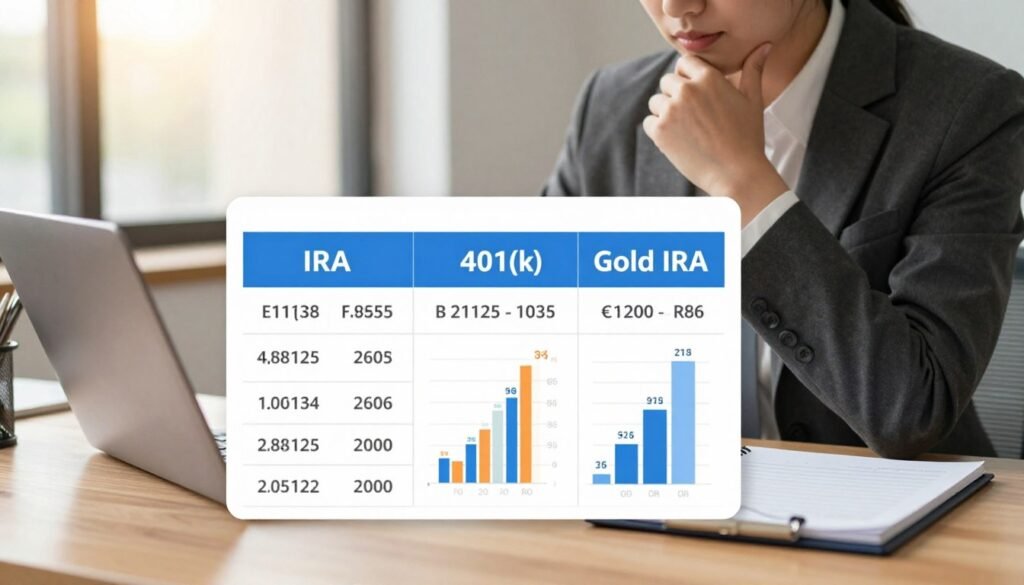
Employer-sponsored plans offer significantly higher savings potential for the coming period. Participants can set aside $24,500, while individual accounts have a $7,500 cap. This substantial gap reflects different regulatory approaches to retirement planning.
The SECURE 2.0 Act introduces exciting changes for older savers. Those aged 60-63 can contribute an extra $11,250 through the “super catch-up” provision. Standard catch-up amounts also differ dramatically between account types.
| Account Type | Standard Limit | Catch-up (50+) | Super Catch-up (60-63) |
|---|---|---|---|
| 401(k) Plans | $24,500 | $8,000 | $11,250 |
| Individual Retirement Accounts | $7,500 | $1,100 | Not Available |
“Strategic retirement planning requires balancing different account types to maximize both immediate tax benefits and long-term growth potential.”
Inflation adjustments drive these annual increases. The IRS uses Consumer Price Index data from September. Current inflation at 3% ensures continued growth in savings opportunities.
Income thresholds affect traditional account deductions. Single filers see phase-outs between $81,000-$91,000. Married couples face ranges from $129,000-$149,000. These limits shape effective tax planning strategies.
Staying current with these changes empowers smarter financial decisions. Each account type serves different needs in a comprehensive retirement strategy.
Strategies for Maximizing Your Retirement Investments with Gold
Building a resilient retirement strategy requires smart tactics beyond just knowing the annual numbers. Implementing effective approaches can significantly enhance your long-term financial security.
Consistent action separates successful savers from those who merely understand the rules. Let’s explore practical methods to optimize your precious metals holdings.
Tips for Regular Contributions and Catch-Up Strategies
Set up automatic monthly payments instead of waiting until year-end. This approach smooths out price fluctuations through dollar-cost averaging.
If you’re over 50, don’t overlook the extra $1,100 catch-up provision. This valuable opportunity helps accelerate your retirement savings progress.
Best Precious Metals Companies of 2026
A quick side-by-side snapshot of minimums, fees, and what makes each provider stand out—so you can choose faster and request a free kit.
Birch Gold Group
Augusta Precious Metals
Noble Gold Investments
GoldenCrest Metals
Lear Capital
Diversifying Your Gold IRA with Other Precious Metals
Consider adding silver, platinum, or palladium to your holdings. Different metals respond uniquely to market conditions, spreading your risk.
| Metal Type | Key Characteristics | Common Uses |
|---|---|---|
| Silver | Industrial demand, affordable entry | Electronics, solar panels |
| Platinum | Rare, high industrial value | Automotive catalysts, jewelry |
| Palladium | Price volatility, auto industry | Catalytic converters, electronics |
Planning for Future Contributions and Rollovers
Schedule annual reviews with a financial advisor who understands precious metals. Professional guidance helps optimize your allocation strategy.
Use direct trustee-to-trustee transfers when moving funds between accounts. This method avoids tax complications and strict deadlines.
Stay informed about annual adjustments to make the most of your retirement planning opportunities. Knowledge empowers better financial decisions.
Get Your Free Precious Metals Information Kit
Conclusion
Looking ahead to your financial future requires careful consideration of all available tools. The increased savings amounts for the coming period—$7,500 for those under 50 and $8,600 for investors 50 and older—create valuable opportunities to strengthen your nest egg.
Remember that these caps apply across all your individual retirement accounts combined. Understanding this helps you avoid penalties while maximizing your retirement strategy. Precious metals offer unique diversification benefits, adding stability to your portfolio.
The flexibility of unlimited rollovers allows you to move substantial sums from existing plans. This bypasses annual restrictions, providing strategic advantages for portfolio adjustments.
Take time to review your current approach. Consider how physical assets might align with your goals. Consulting with a financial professional can provide personalized guidance tailored to your situation.
Staying informed about annual adjustments ensures you never miss important changes. These updates directly impact your savings potential and long-term planning.
The coming year presents exciting possibilities for building security. Maximize your savings, diversify wisely, and create a retirement plan that includes tangible assets alongside traditional investments.