
When planning for your financial future, most people focus on stocks and bonds. But there’s another option that could provide stability when markets get rocky. Precious metals offer a different approach to securing your nest egg.
Both shiny metals have unique roles in a well-rounded portfolio. One tends to be more stable, while the other offers greater growth potential. Understanding their differences helps you make smarter choices for your long-term security.
Many investors don’t realize they can include these assets in their tax-advantaged accounts. This opens up new possibilities for diversification beyond conventional investments. The decision isn’t necessarily about picking one over the other.
Smart portfolio builders often incorporate both to balance different objectives. Each metal responds differently to economic changes, providing complementary benefits. Your choice should align with your personal goals, timeline, and comfort with market fluctuations.
Key Takeaways
- Precious metals can diversify your portfolio beyond traditional stocks and bonds
- Each metal serves different investment objectives and risk profiles
- Many investors successfully incorporate both metals into their strategies
- These assets can be held in tax-advantaged retirement accounts
- Your choice should align with your personal financial goals and timeline
- Market conditions and economic factors affect each metal differently
- Proper storage and regulatory compliance are important considerations
Get Your Free Precious Metals Information Kit

Introduction
Traditional retirement strategies typically emphasize paper assets and market-based investments. However, savvy individuals are exploring alternative approaches to secure their financial future.
Overview of Retirement Investing with Precious Metals
More investors are turning to tangible assets for portfolio diversification. Precious metals have historically served as reliable stores of value during economic uncertainty.
These physical assets often move independently of stock market trends. They provide a safety net when conventional investment vehicles face volatility.
Purpose of Comparing Silver and Gold IRAs
This guide helps retirement planners understand the distinct characteristics of different precious metals options. Each metal offers unique advantages for long-term security.
Financial experts commonly recommend allocating 5-15% of a retirement portfolio to these assets. This balanced approach helps protect purchasing power throughout your golden years.
Understanding both IRA options is essential before committing funds. Our comparison will cover performance differences, risk factors, and storage requirements to help investors make informed decisions about their IRA strategy.
Understanding Precious Metals IRAs
Self-directed retirement accounts open up unique possibilities beyond conventional investment options. These specialized plans let you hold metals that provide tangible security for your future.
What is a Precious Metals IRA?
A precious metals IRA is a self-directed individual retirement account. It allows ownership of physical assets like gold, silver, platinum, or palladium. This differs from traditional retirement accounts that typically contain stocks and bonds.
Your account operates through a specialized custodian who handles transactions and storage. The physical metals must be stored in IRS-approved facilities. You cannot keep these assets at home while maintaining the account’s tax benefits.
IRS Guidelines and Eligibility
The IRS sets strict purity standards for all eligible metals. Gold must be 99.5% pure, while silver requires 99.9% purity. Platinum and palladium need 99.95% fineness to qualify.
Approved products include specific coins and bars from recognized mints. American Eagle coins and Canadian Maple Leaf bullion are common choices. Proper documentation and mint condition are essential for compliance.
Anyone eligible for traditional or Roth iras can open these accounts. Contribution limits match standard retirement plans. This makes precious metals accessible to most investors seeking diversification.
Exploring Gold IRAs
During times of economic uncertainty, certain assets have proven their worth across generations. Physical precious metals offer a distinct approach to safeguarding your future.
Best Precious Metals Companies of 2026
Three top picks to compare quickly—minimums, fees, eligible metals, and what each provider does best.

- Minimum$50,000
- Annual Fees$180
- MetalsGold, Silver
Best for: education-first buyers who want guided support.
Get Free Gold IRA Kit
- Minimum$10,000
- Annual Fees$180
- MetalsGold, Silver, Platinum, Palladium
Best for: clear, straightforward fee expectations.
Get Free Info Kit
- Minimum$25,000
- Annual Fees$225
- MetalsGold, Silver, Platinum, Palladium
Best for: value shoppers who want competitive pricing.
Request Free Info KitDefinition and Key Features of Gold IRAs
A gold ira allows you to hold approved bullion within a tax-advantaged account. This specialized retirement vehicle provides tangible security beyond paper assets.
The IRS sets strict purity standards for eligible products. Your physical holdings must be stored in approved facilities by a qualified custodian.
| Feature | Benefit | Consideration |
|---|---|---|
| Physical Backing | Tangible asset protection | Storage requirements apply |
| Inflation Hedge | Preserves purchasing power | No dividend income |
| Market Independence | Low correlation to stocks | Price fluctuations occur |
| Historical Stability | Proven long-term value | Requires patience |
Historical Stability and Value Preservation
Gold has maintained its value through centuries of economic changes. It serves as a reliable hedge against currency devaluation.
During the 1970s inflation surge, prices rose dramatically. More recently, geopolitical tensions have demonstrated its safe-haven status.
This metal moves independently of paper currencies. It protects retirement savings when traditional investments struggle.
Exploring Silver IRAs
For those looking to diversify their retirement holdings with physical assets, there’s an accessible alternative worth considering. This option combines investment potential with real-world utility.
Definition and Key Features of Silver IRAs
A silver ira operates similarly to its golden counterpart but focuses exclusively on approved bullion. Investors can purchase physical coins or bars that meet IRS purity standards of 99.9%.
This account type offers unique advantages for retirement planning. The metal serves both as a store of value and an industrial commodity.
| Feature | Advantage | Consideration |
|---|---|---|
| Dual-Purpose Asset | Investment and industrial demand | Price influenced by multiple factors |
| Lower Entry Cost | Accessible price per ounce | Higher storage volume needed |
| Industrial Applications | Consistent consumption demand | Economic cycles affect usage |
| Growth Potential | Higher volatility opportunities | Requires risk tolerance |
Affordability and Industrial Demand
The current price per ounce makes this metal dramatically more affordable than other options. This lower entry point allows investors to accumulate larger quantities.

Industrial demand provides strong fundamental support. The metal is essential in electronics, solar technology, and medical applications. These practical uses create consistent consumption beyond investment activity.
Renewable energy expansion continues to drive demand higher. This creates multiple revenue streams supporting long-term value appreciation.
Silver vs Gold IRA: Which Is Better for Retirement?
Investors often face a key decision when selecting physical assets for their retirement accounts. Both options provide stability and diversification, but they behave quite differently in the marketplace.
Comparative Analysis: Benefits and Drawbacks
The yellow metal generally offers more consistent long-term stability. It serves as a reliable wealth preservation tool during economic uncertainty. This characteristic makes it appealing for conservative investors.
The white metal presents higher growth potential during specific economic conditions. Its extensive industrial applications create multiple demand streams. These include electronics, solar technology, and medical devices.
Storage considerations also differ significantly. The denser metal requires less physical space per dollar value stored. The other option needs more storage volume, which can impact long-term costs.
Price Volatility and Market Trends
Market fluctuations affect each metal differently. The industrial metal experiences sharper price swings due to changes in manufacturing demand. Investor sentiment and economic data also influence its volatility.
The traditional safe-haven asset maintains more stable pricing during market turbulence. Its value preservation qualities shine when other investments struggle. This stability comes with potentially slower growth during bull markets.
Your choice between these iras depends on personal risk tolerance and retirement timeline. Conservative planners might prefer stability, while growth-oriented investors may accept higher volatility for potential gains.
Best Precious Metals Companies of 2026
A quick side-by-side snapshot of minimums, fees, and what makes each provider stand out—so you can choose faster and request a free kit.
Birch Gold Group
Augusta Precious Metals
Noble Gold Investments
GoldenCrest Metals
Lear Capital
Economic Performance: Stability and Growth Comparison
Economic conditions significantly influence how different assets perform in your retirement portfolio. Understanding these patterns helps you make smarter choices for long-term security.

Performance During Economic Downturns
The yellow metal has demonstrated remarkable resilience during financial crises. When confidence in traditional investments weakens, this asset typically maintains its value. It serves as a reliable hedge against inflation and market turbulence.
During recessions, demand for safe-haven assets increases significantly. This characteristic helps offset losses in other portfolio components. The metal’s low correlation with equities provides valuable diversification benefits.
Meanwhile, the white metal faces different pressures during economic contractions. Industrial demand often decreases as manufacturing activity slows. This can lead to sharper price declines compared to other precious metals.
Growth Potential in Bull Markets
During periods of economic expansion, the industrial metal often shows stronger performance. Robust manufacturing activity and technological adoption drive consistent consumption. Renewable energy development creates additional demand streams.
This dual nature as both investment asset and industrial commodity creates unique opportunities. The metal can experience significant price appreciation during specific market cycles. However, this comes with higher volatility that requires careful consideration.
Long-term investors should weigh their risk tolerance against potential rewards. Conservative portfolios may prioritize stability, while growth-oriented strategies might accept higher fluctuations for stronger gains.
Assessing Investment Risks and Rewards
Understanding the full spectrum of advantages and limitations helps retirement planners make confident choices. Each precious metal offers distinct characteristics that appeal to different investor profiles.
Pros and Cons of Gold IRAs
Gold IRAs provide exceptional stability as proven safe-haven assets. They serve as reliable hedges against inflation and currency fluctuations. These accounts offer significant benefits for conservative investors.
The higher cost per ounce creates a barrier for some individuals. Price appreciation tends to be slower compared to other metals during strong market rallies. This investment requires patience for long-term gains.
Pros and Cons of Silver IRAs
Silver IRA accounts feature much lower entry costs, making them accessible to more investors. Strong industrial demand supports long-term value across multiple sectors. This creates substantial growth potential during economic expansions.
Higher volatility leads to sharper price swings that may concern risk-averse individuals. The lower value per ounce requires more storage space, potentially increasing costs. Your choice should align with your comfort level regarding market fluctuations.
Both options provide unique benefits for retirement planning. Understanding these differences helps create a balanced approach to precious metals investment.
Storage, Custodian, and Regulatory Considerations
Practical considerations often determine the long-term success of your retirement strategy. Understanding the logistics behind physical asset management helps you avoid unexpected costs and compliance issues.
Storage Costs and Physical Considerations
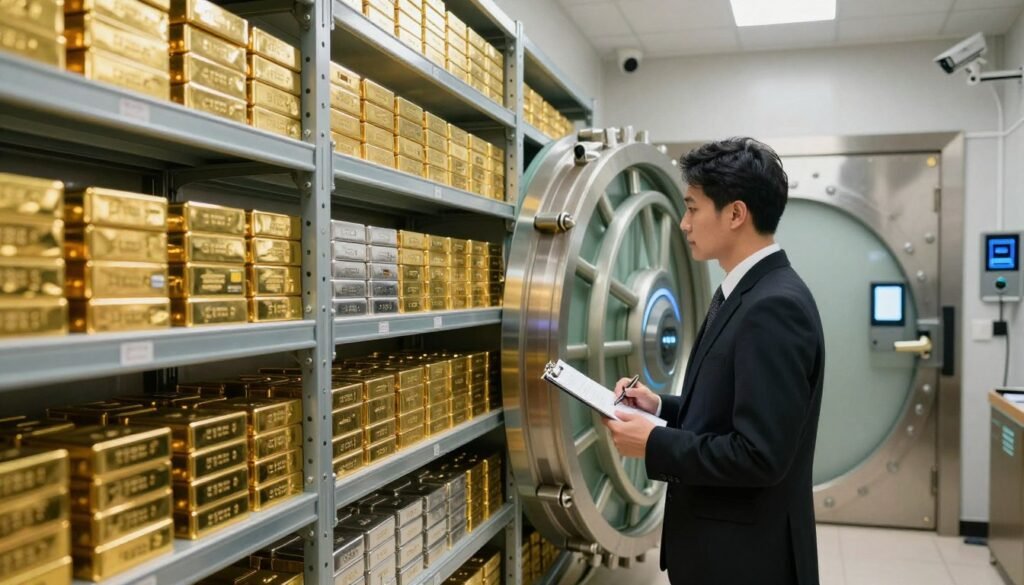
Physical characteristics significantly impact your storage expenses. Denser assets require less space for the same dollar value, potentially lowering fees.
Depositories typically charge based on volume or weight. This means bulkier metals can cost more to store over decades. Insurance costs also reflect these physical differences.
Get Your Free Precious Metals Information Kit
Role of Custodians and IRS Regulations
Your chosen professional handles all transactions and ensures regulatory compliance. They serve as the essential link between you and approved facilities.
The IRS mandates specific storage conditions for tax-advantaged accounts. Home storage triggers immediate taxable distributions, making professional custodian services mandatory.
You’ll choose between segregated or commingled storage options. Segregated arrangements offer enhanced security but come with higher fees.
Always compare provider fees and verify their facility credentials. Proper storage protects your investment while maintaining your account’s legal status.
Building a Diversified Retirement Portfolio
Smart investors recognize that mixing complementary assets creates a more resilient financial foundation. This approach applies perfectly to precious metals in your retirement strategy.
Balanced Allocation Strategies Between Metals
A common professional approach allocates 60-80% to one metal and 20-40% to the other. This balance leverages stability while maintaining growth exposure. Many adjust these percentages based on economic outlook.
During uncertain times, shifting toward 80% of the more stable metal provides maximum safety. Strong industrial growth periods might warrant 40% allocation to the metal with higher potential. This tactical approach enhances diversification benefits.
Regular rebalancing—typically once or twice yearly—keeps your portfolio aligned with original goals. Price movements can shift allocations over time without this maintenance. Consistent adjustments prevent one asset from dominating your strategy.
Combining both metals reduces reliance on single price drivers. They don’t always move in perfect correlation with each other or traditional stocks. This relationship helps smooth returns in self-directed iras over long horizons.
Diversification also protects against unexpected supply disruptions or policy changes. Events affecting one market may not impact the other equally. This layered security strengthens your overall retirement position while offering balanced opportunity.
Expert Tips for Maximizing Your IRA
Expert guidance often makes the difference between average and exceptional retirement outcomes. This comprehensive guide provides professional insights to help you optimize your precious metals strategy.
Professional Recommendations for Allocation
Seasoned financial advisors emphasize that risk tolerance drives allocation decisions. Conservative investors typically favor stability, while growth-oriented individuals may accept more volatility.
Gold tends to perform better during market turbulence, making it suitable for capital preservation. Those approaching retirement often allocate more heavily toward this metal.
“The right allocation balances your timeline, goals, and comfort with market movements. There’s no one-size-fits-all approach to precious metals.”
| Investor Profile | Recommended Allocation | Primary Focus |
|---|---|---|
| Conservative (Near Retirement) | 70-80% Gold, 20-30% Silver | Capital Preservation |
| Balanced Approach | 50-60% Gold, 40-50% Silver | Growth & Stability |
| Growth-Oriented (Younger) | 30-40% Gold, 60-70% Silver | Maximum Returns |
Key Considerations for Long-Term Security
Liquidity is crucial when planning retirement distributions. The yellow metal generally offers higher liquidity due to established global markets.
Consider your complete financial picture, including other holdings and income needs. A qualified advisor can help evaluate all options for your specific situation.
This guide emphasizes researching all available options thoroughly. Your investment strategy should align with long-term security rather than short-term movements.
Conclusion
Navigating the world of physical assets for retirement security leads to one fundamental realization: personalization is key. The right choice between different precious metal options depends entirely on your individual circumstances and goals.
One metal offers exceptional stability and proven wealth preservation, making it ideal for conservative investors. The other provides accessibility and strong growth potential for those with longer timelines. Many savvy investors find that combining both creates the most balanced approach.
These tangible assets play a vital role in protecting your retirement value during economic uncertainty. Before making any decisions, consult with trusted specialists who understand these unique IRA options. You now have the knowledge to make an informed choice for your financial future.
The path to a secure retirement with precious metals is within your reach. Take that next step with confidence.